 EN
 fr
 es
 ru
 ar

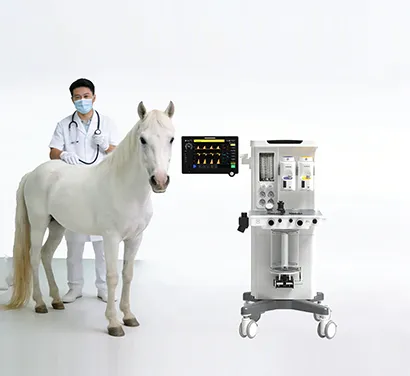
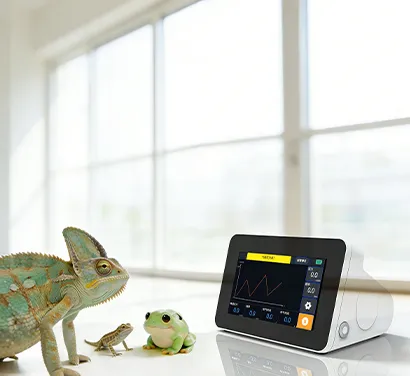
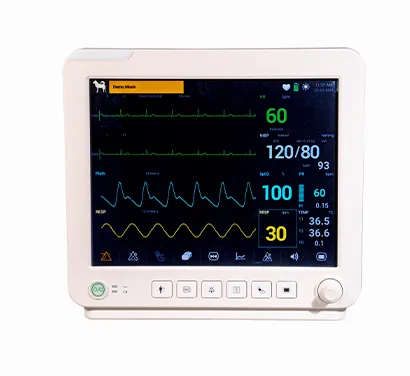
The three things, defined
| Anesthesia machine | |
|---|---|
| What it does | Delivers a controlled mixture of oxygen and volatile anesthetic agent, and removes exhaled CO₂. |
| Core parts | Oxygen supply and regulator, flowmeter, vaporizer, breathing circuit, CO₂ absorber, manometer, APL valve, scavenging. |
| Breathing | The patient breathes spontaneously, or the anesthetist squeezes the reservoir bag by hand. |
| Typical use | Routine procedures on healthy patients: neutering, dentals, mass removals, imaging under anesthesia. |
| Anesthesia ventilator | |
| What it does | Mechanically delivers breaths at a set volume or pressure, replacing the hand on the bag. It is a module, not a standalone anesthetic. |
| Core parts | Bellows or piston or turbine, drive mechanism, rate and volume controls, pressure limit, disconnect and high-pressure alarms. |
| Dependency | Requires an anesthesia machine to supply the gas. A ventilator alone delivers no anesthetic agent. |
| Typical use | Procedures beyond ~60–90 minutes, thoracic surgery, neuromuscular blockade, any case where end-tidal CO₂ stays above 60 mmHg. |
| Anesthesia workstation | |
| What it does | Integrates machine, ventilator and usually a monitor on one chassis, with a shared display and a common alarm system. |
| Core parts | Everything above, plus a central screen, electronic flow and pressure sensing, and often an anesthesia record output. |
| Typical use | Referral hospitals, teaching institutions, high-caseload practices, and any setting where a single integrated alarm system and a printable record are valued. |
The relationship in one sentence
An anesthesia machine can work without a ventilator; a ventilator cannot work without an anesthesia machine; a workstation is both in one chassis with shared electronics.
This is why "anesthesia ventilator" appearing alone in a product name is usually loose terminology rather than a precise claim. Most products sold under that name in the veterinary market are complete anesthesia machines that happen to include a ventilator module. If a listing genuinely describes a ventilator alone, it will have no vaporizer mount and no CO₂ absorber — that is the test.
Which do you need?
| Routine small-animal surgery, healthy patients, under 60 minutes | Anesthesia machine. Manual ventilation via the bag is adequate and the money is better spent on monitoring. |
|---|---|
| Mixed caseload with occasional long or complex cases | Anesthesia machine with a ventilator module, or a machine that can accept one later. Confirm upgradeability in writing before buying on that basis. |
| Thoracic surgery, neuromuscular blockade, or regular procedures over 90 minutes | Machine plus ventilator, not optional. An open chest abolishes effective spontaneous ventilation. |
| Referral centre, teaching hospital, research facility | Workstation. The integrated alarm system and the anesthesia record are the reasons, more than the ventilator itself. |
| Equine and large animal | Workstation in practice. A recumbent horse hypoventilates reliably, so mechanical ventilation is a baseline requirement rather than an upgrade. |
| Laboratory rodent work | Specialist small-volume machine. Most general-practice ventilators cannot deliver a 4 mL breath accurately. |
Ventilator drive mechanisms, and why the choice matters
If you are buying a ventilator or a machine with one built in, the drive mechanism determines your running cost and your infrastructure requirement more than any other specification.
| Pneumatic (gas-driven bellows) | Uses compressed gas to drive the bellows. Simple and robust, no mains power dependency in some designs — but consumes drive gas continuously, which means a second gas supply and a recurring cost. Check whether drive gas is oxygen or air; oxygen-driven units can consume more oxygen driving the bellows than reaches the patient. |
|---|---|
| Piston (electrically driven) | An electric motor drives a piston. No drive gas, so no second supply and no added consumption. Requires mains power and a battery for transport and power cuts. Generally more accurate at small tidal volumes. |
| Turbine / blower | An electric turbine generates flow. Compact and responsive, no drive gas. Common where portability matters. Battery runtime becomes a specification to check. |
The practical question for a buyer without piped medical gas: a pneumatic ventilator needs a second cylinder or a compressor. If your oxygen comes from a concentrator rather than cylinders, a pneumatic ventilator may not be viable at all, because most concentrators cannot supply the pressure and flow a bellows drive requires.
Reading a product name
Product names in this category are frequently assembled from marketing terms rather than defined ones. A reliable way to work out what is actually on offer, regardless of the name, is to look for four things in the specification:
- A vaporizer mount or named agent. Present means it delivers anesthetic. Absent means it is a ventilator or a critical-care device, not an anesthetic machine.
- A CO₂ absorber canister with a stated capacity. Present means a rebreathing circle system.
- A tidal volume range with an accuracy figure. Present means there is a mechanical ventilator. Absent means manual ventilation only.
- A display size and type. A 10-inch-plus integrated screen generally indicates a workstation rather than a basic machine.
Those four lines tell you what a product is more reliably than its name does.
Frequently asked questions
Is an anesthesia ventilator the same as an ICU ventilator?
No. An ICU ventilator supports breathing in a conscious or sedated patient over hours or days and delivers no anesthetic agent; it has sophisticated modes, patient-triggered breathing and long-term alarm management. An anesthesia ventilator works inside a closed anesthetic circuit alongside a vaporizer and absorber for the duration of a procedure. The two are not interchangeable in either direction.
Can I add a ventilator to an anesthesia machine later?
Sometimes. It depends on whether the machine has a ventilator interface on the circle system and whether the manufacturer offers a compatible module. Retrofitting a third-party ventilator to a machine not designed for it creates circuit-compliance and alarm-integration problems. If a later upgrade is part of your reasoning for choosing a machine, get the specific upgrade path and part number confirmed in writing before you buy.
Do I need a workstation, or is a machine plus a separate monitor enough?
A machine plus a good standalone monitor meets the same clinical standard and usually costs less. What a workstation adds is a single integrated alarm system, one screen instead of two, and in most cases an electronic anesthesia record. The 2025 ACVAA guidelines expanded their record-keeping recommendations, which makes the record output a more substantive reason to choose a workstation than it was previously.
What does ACGO mean on a spec sheet?
Auxiliary Common Gas Outlet. It lets you divert the fresh gas mixture away from the circle system to a non-rebreathing circuit, which is how you anesthetize a patient under roughly 3–5 kg on a machine otherwise set up for a circle system. For a practice that sees cats, rabbits or exotics, it is close to essential.
Why do some products called "anesthesia ventilator" include a vaporizer?
Because the naming in this category is loose. A product with a vaporizer and a CO₂ absorber is an anesthesia machine regardless of what the model name says. Check the specification rather than the name — and if a supplier cannot explain which of the three their product is, that is useful information about the supplier.