 EN
 fr
 es
 ru
 ar

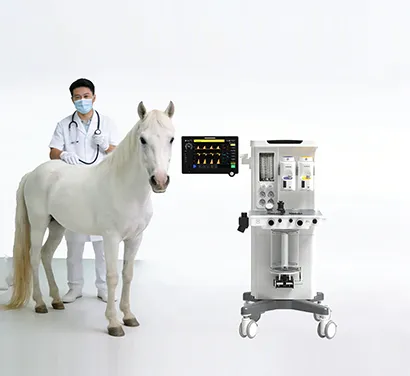
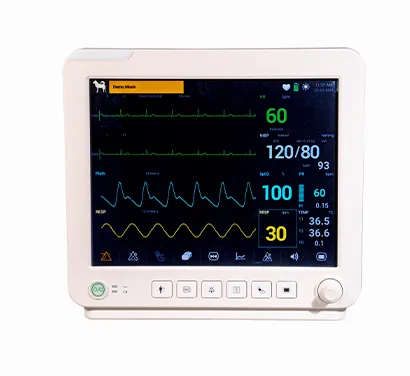
A magnet does not switch off between scans. The static field is always present, and a ferromagnetic object brought too close becomes a projectile travelling toward the bore — potentially through whoever is standing in the way. This is why MRI anesthesia is an equipment and procedure problem before it is a clinical one.
The labelling system, and the term that is not defined
Equipment intended for the MRI environment is categorised under ASTM F2503 into three classes:
| MR Safe | Poses no known hazard in any MR environment. Inherently non-magnetic, non-metallic and electrically non-conductive — plastics, glass and ceramics typically qualify. A scientific rationale can often support the designation without additional testing. |
|---|---|
| MR Conditional | Safe only under specified conditions. May contain metal, such as small markers or metal-containing polymers. The labelling must state the conditions — permissible magnetic field strengths and the types of RF field exposure, along with any pre- or post-scan instructions and information on image artifacts. For equipment used outside the bore, labelling should also address the static field and warn about projectile hazards. |
| MR Unsafe | Must not enter the MR environment. Contains electrically conductive or ferromagnetic components that could cause harm. |
"MRI compatible" is not one of these categories, and there is no standard definition of it. A supplier describing equipment as "MRI compatible" has told you nothing verifiable. The question to ask is: is this device MR Conditional, and what exactly are the conditions on its label?
The zones
The American College of Radiology describes the MRI facility in four zones. The scheme is designed for human facilities but applies directly to veterinary installations.
| Zone 1 | Field typically under 0.5 gauss. Freely accessible to the public, no screening required. |
|---|---|
| Zone 2 | A buffer area where individuals are typically screened before proceeding. |
| Zone 3 | The area immediately outside the magnet room, where the field can already be hazardous to unscreened people. |
| Zone 4 | The magnet room itself. Ferromagnetic objects must be excluded. |
The gauss line, and a cautionary case
Field strength falls with distance from the magnet, and the contours of equal field strength are the "gauss lines". Equipment manufacturers specify a maximum field in which their device may operate, and that line is where the device must stop.
A published case from a human facility makes the point better than any general warning. An anesthesia ventilator failed after repeated exposure above its rated limit. Two details are worth carrying across to veterinary practice:
- The machine's own gauss indicator was mounted away from the ventilator, so it did not warn staff when the ventilator itself swung into the high-field zone.
- A side bar had been removed from the machine. That bar existed to prevent lateral swinging; without it, the machine could drift closer to the magnet than intended.
The facility's response was to install permanent 300 gauss line markers in all its MRI suites. The manufacturer's guidance was to keep those machines outside 300 gauss and to inspect them regularly.
The transferable lessons: equipment must stay in its original configuration, because removed components may have been doing safety work that is not obvious; the field limit must be marked on the floor rather than left to judgement; and a device's own field indicator is only useful if it is physically on the part that matters.
What makes MRI anesthesia operationally hard
| Projectile risk | Any ferromagnetic item — oxygen cylinder, instrument tray, stethoscope, a staff member's pocket contents — becomes a hazard in Zone 4. |
|---|---|
| Obstructed sightlines | The patient is inside the bore. Direct observation of the chest, mucous membranes and circuit is limited or impossible. |
| Noise | Scanning is loud enough to make auscultation impractical and to mask audible alarms. |
| Distance | Long circuit and sampling lines increase compliance and delay capnograph response, which changes how readings should be interpreted. |
| Field avoidance | Staff must keep both themselves and the equipment outside defined limits, which constrains where the anesthetist can stand. |
| Image artifacts | Equipment near the bore can degrade images. MR Conditional labelling should state what artifacts to expect. |
Because auscultation is impractical and direct observation limited, instrumented monitoring carries more weight in MRI than anywhere else. Capnography, pulse oximetry and blood pressure become the primary rather than the confirmatory signals — which means the monitor must itself be MR Conditional and sited within its own rated field.
Two ways to run MRI anesthesia
Equipment inside Zone 4. An MR Conditional machine and monitor placed within their rated field limits, with the gauss line marked on the floor. This gives short circuit lines and responsive monitoring. It requires properly labelled equipment and disciplined positioning.
Equipment outside, extended lines through the waveguide. A conventional machine remains in Zone 3 with long breathing hoses and sampling lines passing into the magnet room. This avoids the need for MR Conditional gas delivery, but the long circuit adds compliance — meaning a larger share of each delivered breath is lost to the tubing rather than reaching the patient — and delays capnograph response. Both effects must be understood rather than discovered mid-scan.
Neither approach removes the need for an MR Conditional monitor, since monitoring has to happen close to the patient either way.
Questions to ask a supplier
- Is this device MR Safe, MR Conditional or MR Unsafe under ASTM F2503? "MRI compatible" is not an answer.
- If MR Conditional, what is the maximum static field in gauss or tesla at which it may operate?
- What RF and gradient conditions are specified on the label?
- Does the device have a field strength indicator, and is it mounted on the part that must respect the limit?
- What image artifacts should be expected, and at what distance?
- Which accessories are covered by the labelling — does it extend to hoses, cables, probes and the trolley?
- What scanner strengths has it been evaluated at? A device assessed at 1.5 T is not automatically acceptable at 3 T.
- Are there components whose removal would void the conditions, as in the side-bar case?
Frequently asked questions
What does "MR Conditional" mean?
That the device is safe only under conditions stated on its label — typically a maximum static magnetic field strength and specified RF exposure conditions, plus any handling instructions and expected image artifacts. Outside those conditions it is not safe. The label is the specification, not the marketing description.
Is "MRI compatible" the same as "MR Safe"?
No. "MRI compatible" has no standard definition and appears nowhere in the ASTM categories. The defined terms are MR Safe, MR Conditional and MR Unsafe. If a supplier uses "compatible", ask which of the three categories applies and what the labelled conditions are.
Can I use my normal anesthesia machine for MRI?
Only if it stays outside the magnet room, in Zone 3, with extended breathing and sampling lines running into Zone 4. That arrangement works but adds circuit compliance and delays capnograph response. You will still need an MR Conditional monitor, because monitoring has to happen near the patient.
What is the gauss line and why does it matter?
Gauss lines are contours of equal magnetic field strength around the magnet. Equipment manufacturers specify a maximum field their device may be exposed to, and the corresponding line is the boundary the device must not cross. Marking that line permanently on the floor is good practice — in one published case, a facility installed 300 gauss markers after a ventilator failed following repeated over-limit exposure.
Why is monitoring more important in MRI than elsewhere?
Because the patient is inside the bore and the scanner is loud. Direct observation of chest movement and mucous membranes is limited or impossible, and auscultation is impractical. Capnography, pulse oximetry and blood pressure become the primary signals rather than confirmation of what you can already see.
Does the patient's own hardware matter?
Yes. Implants, microchips and surgical metalwork all need consideration before a patient enters Zone 4, and the same MR Safe, MR Conditional and MR Unsafe framework applies to them. That assessment belongs with the clinical team and the imaging facility, not with the equipment supplier.