 EN
 fr
 es
 ru
 ar

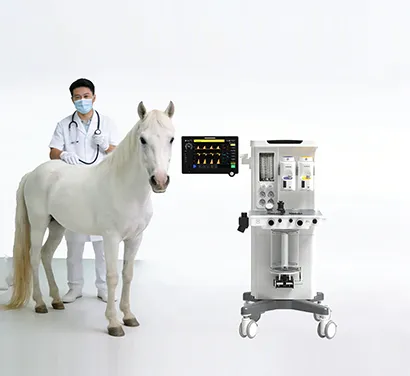
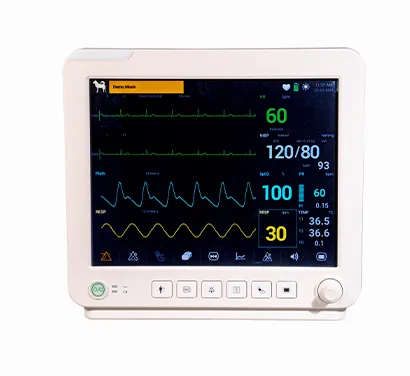
Three things changed that matter for equipment decisions. Recommendations are now grouped into basic, advanced and alternative tiers rather than a single list, so a practice can see what is expected of it at its own level. Coverage was extended to procedural sedation and the immediate recovery period, not just inhalant anesthesia. And record-keeping and checklists were expanded substantially.
The minimum tier, by domain
| Circulation | |
|---|---|
| Minimum | Continuous ECG; oscillometric blood pressure at least every 5 minutes; time-based capnography; hands-on assessment of pulse quality, heart auscultation and capillary refill time |
| Advanced | Invasive arterial pressure; dynamic indices of fluid responsiveness (PVI, SPV, PPV); echocardiography or caudal vena cava ultrasound; venous blood gas and lactate |
| Oxygenation | |
| Minimum | Pre-anesthesia equipment check; assessment of mucous membrane colour and ventilatory effort; pulse oximetry in heavily sedated or anesthetized patients |
| Advanced | Arterial blood gas / PaO₂; measurement of inspired oxygen fraction (FIO₂); co-oximetry |
| Ventilation | |
| Minimum | Observation of chest or reservoir bag movement; auscultation; airway pressure manometer; time-based capnography |
| Advanced | Arterial or venous blood gas for PCO₂; spirometry |
| Temperature | |
| Minimum | Rectal or esophageal temperature |
| Advanced | No separate advanced tier is listed |
Two items in the minimum tier are properties of the anesthesia machine rather than the monitor: the pre-anesthesia equipment check and the airway pressure manometer. A machine supplied without a manometer cannot meet the minimum standard for ventilation monitoring, whatever monitor is paired with it. Worth knowing when a quotation lists the manometer as an option.
Every numeric threshold
| Mean arterial pressure | Below 60–65 mmHg — assess and intervene |
|---|---|
| Doppler systolic pressure | 90 mmHg or below — assess and intervene |
| SpO₂ | Below 95% — investigate, including checking for technical problems |
| End-tidal CO₂ | Above 60 mmHg — address |
| Inspired CO₂ | Should be at or near 0 mmHg |
| Endotracheal cuff inflation | No audible leak at approximately 20 cmH₂O |
| Body temperature | Below 37.8 °C (100 °F) — begin active external warming |
| Train-of-four ratio | 90% or higher indicates normal neuromuscular function |
| Recording interval — HR, arterial pressure, SpO₂, EtCO₂ | Generally every 5 minutes |
| Recording interval — other variables | At least every 15 minutes |
| Temperature check — under sedation or anesthesia | At least every 15 minutes |
| Temperature check — in recovery | At least every 30 minutes |
The inspired CO₂ threshold deserves a note. A reading above zero is almost always an equipment fault rather than a patient problem — exhausted carbon dioxide absorbent, or a one-way valve that is not seating. Capnography therefore monitors the patient and audits the machine simultaneously, which is part of why it appears in the minimum tier for both circulation and ventilation.
The designated anesthetist
The guidelines state that a designated anesthetist should be responsible for the patient and remain with them throughout — under sedation, injectable anesthesia or inhalant anesthesia alike. That person handles preparation, drug administration and vital-sign monitoring. A licensed veterinarian must approve the protocol.
This is a staffing requirement rather than an equipment one, and in many practices it is the harder of the two to meet. No monitor substitutes for a person whose only job during the procedure is the patient.
Recovery: the newly emphasised phase
The 2025 revision extends monitoring explicitly into recovery, and notes that the first three hours after anesthesia carry the highest risk of morbidity and mortality.
| Observation | Continuous visual observation until the patient is physiologically stable |
|---|---|
| Staffing | At least one additional person immediately available |
| Monitoring | Oxygenation, circulation, ventilation and temperature continue to be monitored |
| Pain | A pain scoring tool should be used |
| Discharge criteria | Normothermia, orientation, ambulation (unless precluded), and absence of nausea and pain |
The equipment implication is that monitoring capacity has to extend beyond the theatre. A practice with one monitor on the anesthesia machine and nothing in the recovery area is not equipped to follow this guidance — which is a reasonable argument for a second, simpler monitor rather than a more elaborate single one.
Records and checklists
This is the section that expanded most, and it is the one most likely to change what a practice buys.
- A standardised anesthesia checklist, including equipment, should be used before each anesthetic.
- Emergency drug doses calculated in advance and kept immediately available on a printed or digital sheet.
- A written or electronic record documenting drugs, monitored values and interventions.
- A surgical safety checklist, and a standardised handoff checklist whenever patient care transfers between people.
A monitor or workstation that exports an electronic anesthesia record satisfies the third item without adding to the anesthetist's workload during the case. That is now a more substantive reason to choose an integrated workstation than it was under the 2009 guidance.
What this means when specifying equipment
| From the machine | Airway pressure manometer fitted as standard; a functioning APL valve so the pre-use leak test can be performed; scavenging so the equipment check is meaningful |
|---|---|
| From the monitor | ECG, oscillometric NIBP, SpO₂, time-based capnography and temperature as a minimum set — these four domains are not optional under the basic tier |
| Probe and cuff sizes | Must fit the species range you treat. Dog-sized cuffs and probes give unreliable readings on cats, rabbits and exotics |
| Recovery area | Some monitoring capability outside the theatre, given that recovery is now explicitly covered and is the highest-risk window |
| Record output | Electronic record export if you want to meet the record-keeping recommendations without adding manual work |
| Advanced tier, if relevant | Invasive arterial pressure channel and transducers — routine in equine practice, advanced in small animal |
Frequently asked questions
What changed in the 2025 ACVAA guidelines?
They replaced the 2009 version. Hemodynamic, respiratory and thermoregulatory monitoring were updated; neuromuscular blockade monitoring was expanded; personnel protocols were strengthened; record-keeping and checklists were expanded; recommendations were grouped into basic, advanced and alternative tiers; and coverage was extended to procedural sedation and the immediate recovery period.
Is capnography now mandatory?
Time-based capnography appears in the minimum tier for both circulation and ventilation, so it is part of what the guidelines describe as basic monitoring rather than an advanced option. For a practice currently monitoring with pulse oximetry alone, this is the most significant practical gap.
What blood pressure counts as too low?
Mean arterial pressure below 60–65 mmHg should prompt assessment and intervention. Where Doppler is used, a systolic pressure of 90 mmHg or below triggers the same response. The guidelines also specify that oscillometric pressure should be measured at least every five minutes.
How often should temperature be checked?
At least every 15 minutes in moderately to heavily sedated or anesthetized patients, and at least every 30 minutes into recovery. Active external warming should begin below 37.8 °C (100 °F).
Do the guidelines apply to sedation as well as general anesthesia?
Yes. The 2025 revision explicitly extends guidance to procedural sedation, which is a change from the previous version. Pulse oximetry in heavily sedated patients and temperature checks every 15 minutes both apply under sedation, not only under inhalant anesthesia.
Why does the first three hours after anesthesia matter so much?
The guidelines identify that window as carrying the highest risk of morbidity and mortality. The practical consequences are continuous visual observation until the patient is physiologically stable, a second person immediately available, and continued monitoring of all four domains rather than stopping at extubation.