 EN
 fr
 es
 ru
 ar

The reference point throughout is the 2025 ACVAA monitoring guidelines, because they define the minimum rather than leaving it to opinion.
Phase 1 — Cannot operate without
| Gas delivery | |
|---|---|
| Anesthesia machine | Sized for your patient weight range. Must include an airway pressure manometer and a functioning APL valve as standard — both are needed for the pre-use leak test and the manometer is named in the ACVAA minimum for ventilation monitoring. |
| Breathing circuits | Circle system for patients above 3–5 kg; non-rebreathing circuit below that. An ACGO on the machine to feed the non-rebreathing circuit. |
| Vaporizer | Agent-specific, temperature- and flow-compensated. Confirm agent availability in your market first. |
| Oxygen supply | Cylinders, concentrator or piped. If a concentrator, a backup cylinder is mandatory, not optional. |
| Scavenging | Active where the building allows ducting; charcoal canister with a weighing routine otherwise. |
| Monitoring (ACVAA minimum tier) | |
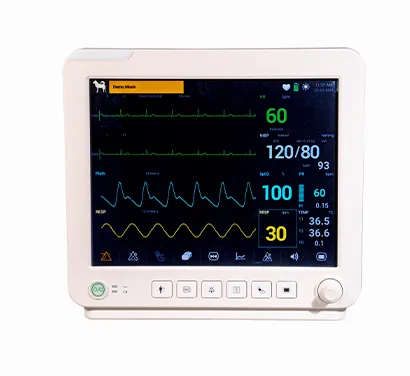
| Multiparameter monitor | ECG, oscillometric NIBP, SpO₂, time-based capnography, temperature. All four domains are basic-tier, not advanced. |
| Probes and cuffs | In sizes covering your actual species range. Dog-sized cuffs and probes do not read reliably on cats or rabbits. |
| Thermometer | Rectal or esophageal, for the every-15-minute check. |
| Airway and access | |
| Endotracheal tubes | Full size range for your species, including smaller than body weight predicts for brachycephalic patients. |
| Laryngoscope | With blade sizes to match. Blind intubation is a poor default in any species and close to unworkable in rabbits. |
| IV catheters and fluid pump | Catheter sizes across the range; a syringe or infusion pump for controlled rates in small patients. |
| Thermal and surgical | |
| Active warming | Forced-air or circulating-water. Uncontrolled heat pads and lamps risk burns on anesthetized skin. |
| Surgery table | Height-adjustable, tiltable, cleanable. |
| Surgical light | Shadowless, adjustable colour temperature if possible. |
| Instruments and sterilisation | Packs sufficient for your turnover plus an autoclave sized to match. |
| Safety and records | |
| Emergency drug sheet | Doses pre-calculated for the patient, printed or digital, immediately available — an explicit ACVAA recommendation. |
| Pre-anesthetic checklist | Standardised, including equipment. Also an ACVAA recommendation. |
| Anesthesia record | Written or electronic, documenting drugs, monitored values and interventions. |
Phase 2 — Needed as caseload grows
| Mechanical ventilator | Required once procedures routinely exceed 60–90 minutes, for thoracic surgery, with neuromuscular blockade, or whenever EtCO₂ sits above 60 mmHg. If oxygen comes from a concentrator, choose an electrically driven (piston or turbine) unit rather than a pneumatic one. |
|---|---|
| Recovery-area monitoring | The 2025 guidelines extend monitoring into recovery and identify the first three hours as highest risk. A second simpler monitor is usually better value than upgrading the theatre monitor. |
| Oxygen cage | For respiratory distress cases before and after procedures. Budget 15 L/min to flush and 5 L/min to maintain. |
| Second vaporizer | If a brachycephalic or exotic caseload justifies running sevoflurane alongside isoflurane. Requires a machine with two positions and an interlock. |
| Electrosurgery unit | Shortens procedures and reduces blood loss. |
| Suction | Also useful as a scavenging source if the machine's interface supports it. |
| Doppler | A reliable fallback where oscillometric NIBP struggles — small patients, poor peripheral perfusion. |
Phase 3 — Specialisation
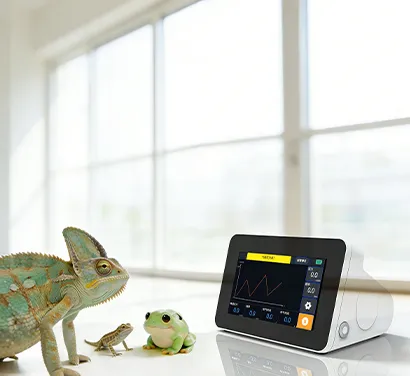
| Exotic and small mammal work | Low-dead-space connectors, low-flow-capable flowmeter, induction chamber with scavenging, ventilator with a low minimum tidal volume, appropriately small probes |
|---|---|
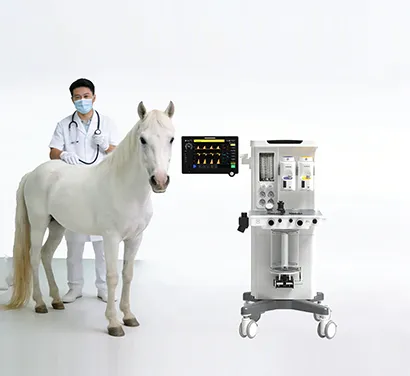
| Equine and large animal | A separate machine entirely — 50 mm circuit, 15–30 L bellows, litre-scale absorber, demand valve, padded recovery, hoist, invasive blood pressure capability |
| Referral or teaching | Workstation with integrated alarms and electronic record output; invasive arterial pressure; blood gas analyser |
| Imaging under anesthesia | Equipment appropriate to the modality — for MRI this is a distinct category with its own labelling requirements, not a matter of moving the usual machine closer |
| Dentistry | Dental unit with scaler and polisher, dental radiography, and a non-rebreathing-capable setup for the many small patients involved |
Infrastructure that is easy to forget
- Ventilation. At least 15 air changes per hour in theatre and 6 in recovery. This is a building decision, not an equipment one, and it is almost impossible to retrofit cheaply.
- Power. Enough outlets at the right points, and a plan for power failure — particularly if oxygen comes from a concentrator.
- A route for scavenging ducting to outside, decided before the room is finished.
- Space around the table. The anesthetist needs access to the head, the surgeon needs the field, and the machine needs to sit where its controls and manometer are visible from where the anesthetist stands.
- Recovery area sightlines. Continuous visual observation is an ACVAA requirement; it is much easier to meet if the recovery kennels are visible from where staff actually work.
Specifications to confirm before ordering
- Minimum and maximum deliverable tidal volume, with accuracy at the minimum.
- Flowmeter range, and whether a separate low-flow tube is fitted.
- Patient-connector dead space in millilitres.
- Vaporizer agent, compensation type and recalibration interval — and who recalibrates it in your country.
- Manometer and APL valve fitted as standard, not optional.
- ACGO present.
- CO₂ absorber capacity, and local availability of replacement absorbent.
- Scavenging type and what is included in the box.
- Monitor probe and cuff sizes against your species range.
- Which certificates cover each exact model, and their scope.
- Spare parts lead time to your country, and who performs service locally.
- Electrical supply requirements, including whether anything needs three-phase power.
Frequently asked questions
What is the minimum equipment to open a small-animal surgery?
An anesthesia machine with a manometer, APL valve, agent-specific vaporizer and both circuit types; an oxygen supply with backup; scavenging; a multiparameter monitor covering ECG, blood pressure, SpO₂, capnography and temperature; a full range of endotracheal tubes and a laryngoscope; IV access and a fluid pump; active warming; a table, light, instruments and an autoclave; plus the emergency drug sheet, checklist and anesthesia record the ACVAA guidelines recommend.
Can I start without capnography?
You can physically operate without it, but time-based capnography sits in the minimum tier of the 2025 ACVAA guidelines for both circulation and ventilation, so a practice without it is not meeting the current standard. It is also the measurement that detects absorbent exhaustion and one-way valve failure, so it audits the machine as well as the patient.
Should I buy a workstation or a machine plus a separate monitor?
A machine plus a good standalone monitor meets the same clinical standard and usually costs less. A workstation adds integrated alarms, a single screen and, in most cases, an electronic anesthesia record — the last of which has become a more substantive advantage now that the ACVAA guidelines have expanded their record-keeping recommendations.
What is the most common sizing mistake?
Specifying for the average patient rather than the extremes. The lightest and heaviest animals on your surgery list determine your circuits, your flowmeter range and your ventilator's minimum tidal volume. A machine that is perfect for a 20 kg dog may be unusable for a 2 kg cat and inadequate for an 80 kg one.
How much headroom should I leave in an oxygen concentrator?
Size for total simultaneous demand plus genuine spare capacity — a practice whose peak need is 60 L/min should not install a 60 L/min unit. Account for altitude as well: above roughly 457 m, both flow and output pressure fall.
What gets forgotten most often in a new build?
Ventilation and the scavenging duct route. Both are building decisions that are cheap during construction and expensive afterwards, and neither appears on an equipment quotation.