EN
EN
 fr
fr  es
es  ru
ru  ar
ar 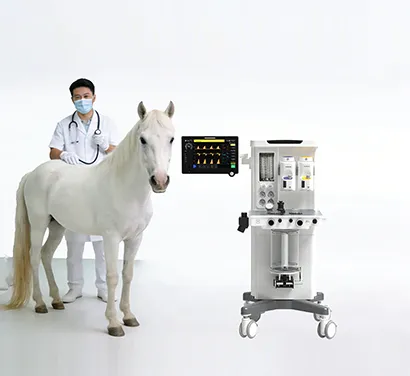
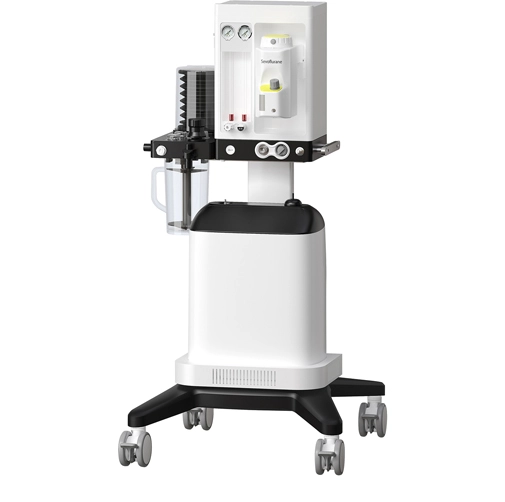

When it comes to advanced veterinary imaging like MRI, animal safety and precise anesthesia delivery are paramount. Traditional anesthesia systems often struggle with magnetic field compatibility or bulky setups.
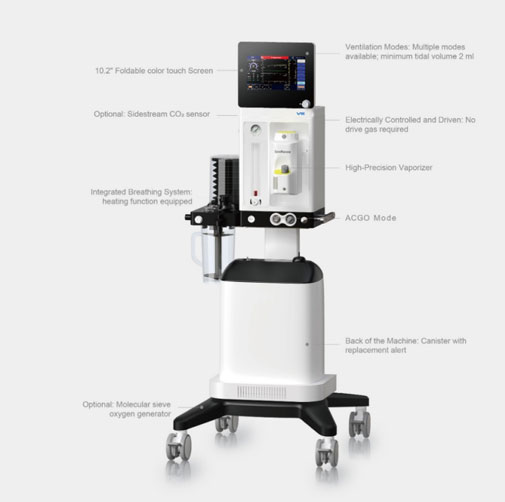
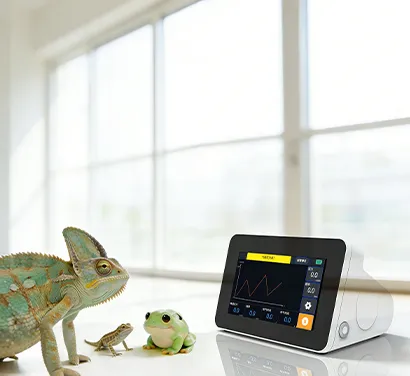
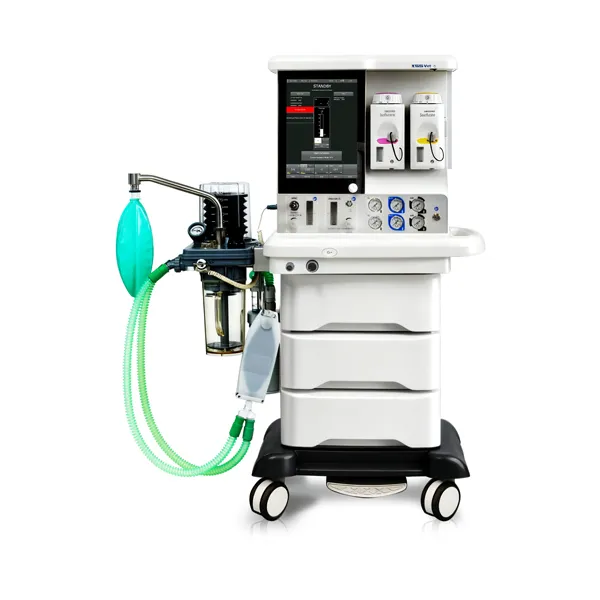
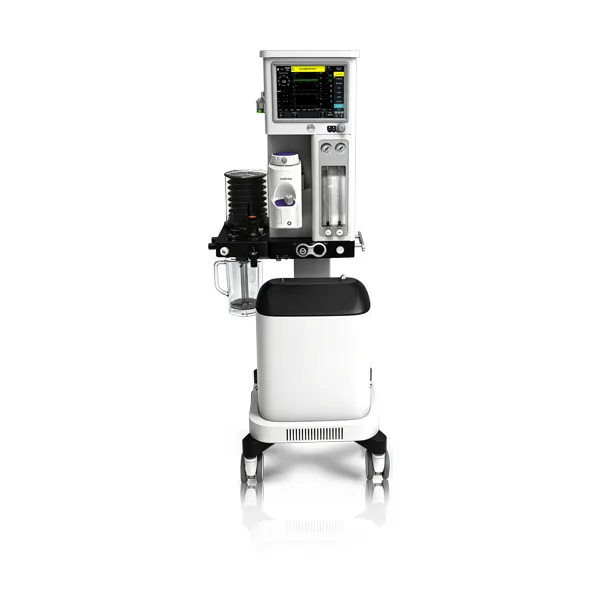
Introducing the V3 MRI-Compatible Veterinary Anesthesia Machine by RHCMed (Real Healthcare) — engineered specifically to deliver Safety, Efficiency, and Versatility in high-field imaging environments!
Designed and certified for use in 3T and lower magnetic-field environments, ensuring zero interference with advanced imaging results while keeping your patient stable.
An all-in-one compact structure built for versatile application scenarios—whether as a mobile trolley, wall-mounted, or desktop setup. Its clean, space-saving footprint fits effortlessly into busy imaging rooms or operating suites.
Featuring an integrated Auxiliary Common Gas Outlet (ACGO), allowing veterinarians to switch between rebreathing and non-rebreathing circuits with a single button press for maximum efficiency.
Designed with clinical workflow in mind! The CO₂ absorption canister can be installed with one hand and unlocked with a single button, making soda-lime replacement faster and smoother than ever.
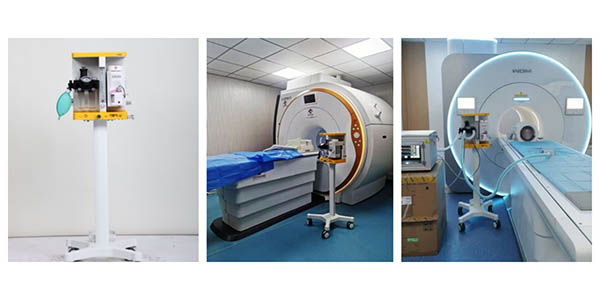
Preventing the "Projectile Effect": Standard anesthesia machines contain significant ferromagnetic components that can be violently attracted toward the MRI bore. This creates a severe projectile risk that can injure animals and staff, or cause catastrophic damage to expensive MRI equipment.
Non-Magnetic Engineering: Specialized MRI anesthesia machines are built with non-ferromagnetic materials and shielded structural designs, allowing them to operate safely within high-magnetic-field environments.
MRI imaging is highly sensitive to electromagnetic interference. Standard electronic or unshielded metal equipment can malfunction or generate signal noise, leading to image artifacts and blurring that directly compromise diagnostic accuracy for brain, spine, or tumor evaluations.
Requirement for Absolute Motionlessness: MRI scans take anywhere from 30 to 60 minutes or longer, and any movement will ruin the scan. Continuous, precise inhalant anesthesia is mandatory to maintain stable sedation.
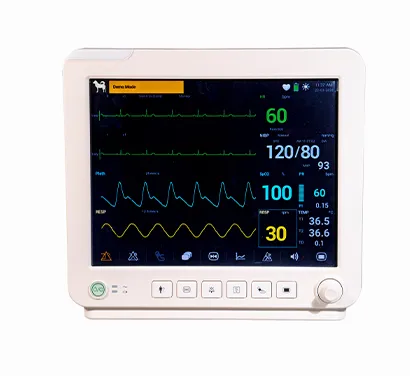
Reliable Airway & Ventilation Support: Because the animal is inside a long, narrow scanner bore where direct physical access is limited, a specialized machine ensures stable gas delivery and ventilation monitoring throughout the procedure.
MRI suites are typically crowded with large imaging equipment. Dedicated MRI anesthesia machines feature lightweight, compact profiles that support flexible mounting options—such as desktop, wall-mount, or mobile trolley setups—fitting seamlessly into busy, space-restricted imaging environments.