 EN
EN
 fr
fr  es
es  ru
ru  ar
ar 
Nov-24-2024

Advanced diagnostic imaging has transformed veterinary medicine. High-field magnetic resonance imaging (MRI) systems, particularly those operating at 1.5 Tesla (1.5T) or 3.0 Tesla (3T), allow veterinary neurologists, oncologists, and orthopedic surgeons to visualize soft tissue structures with unprecedented clarity. However, the immense benefits of high-field imaging come with unique operational challenges, particularly when it involves anaesthesia for MRI.
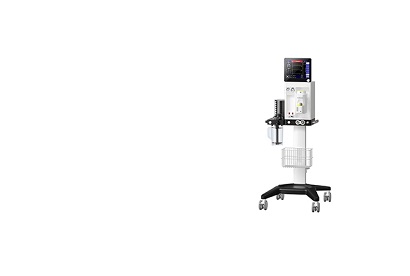
Unlike human patients, animal patients cannot remain completely motionless inside a loud, narrow MRI bore for 45 to 90 minutes without chemical immobilization. General anesthesia is mandatory. Yet, placing standard operating room equipment near a high-field magnet is a recipe for catastrophic failure. For modern veterinary imaging centers and comprehensive animal hospitals, investing in a specialized, non-magnetic MRI anesthesia machine is an absolute necessity to maintain patient safety, protect expensive imaging infrastructure, and ensure crisp, artifact-free diagnostics.
To appreciate the necessity of specialized veterinary MRI anesthesia systems, one must understand the environment inside the RF-shielded scanning room.
An MRI magnet is never turned off. It generates a continuous, invisible, and immensely powerful magnetic field. Any item containing ferromagnetic materials—such as standard iron, steel, or certain nickel alloys—will be pulled toward the center of the magnet with terrifying velocity. This is known as the "missile effect." A standard anesthesia machine brought past the 5-gauss safety line can instantly become a airborne projectile, risking fatal injury to the animal patient, injuring the clinical staff, and causing hundreds of thousands of dollars in structural damage to the MRI scanner.
Even if a machine is heavily anchored or placed far enough away to prevent a physical collision, minor ferromagnetic components can distort the local magnetic field uniformity. This distortion causes geometric warping, signal loss, and massive black voids on the final diagnostic scans, rendering the expensive MRI procedure useless. Furthermore, radiofrequency (RF) pulses from the scanner can induce electrical currents in external exposed wires or tubes, posing severe thermal burn risks to the anesthetized animal.
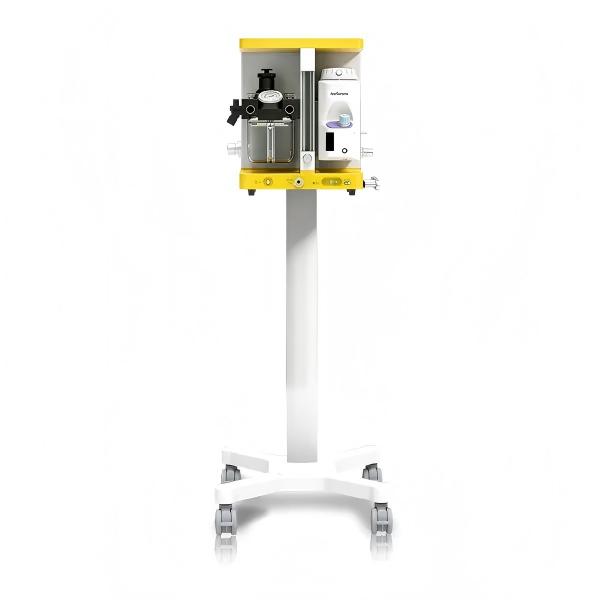
Experienced veterinary directors look beyond general suppliers and partner with elite, specialized anesthesia machine manufacturers who construct equipment using verified non-ferromagnetic materials like high-grade aluminum, brass, titanium, and advanced engineering plastics.
When selecting a workstation for your advanced imaging suite, the device profile must go beyond marketing labels. A genuine high-field veterinary anesthesia system must meet strict, quantifiable engineering standards.
Many older systems are only rated safe for low-field 0.5T or 1.5T magnets. Modern veterinary imaging centers are rapidly moving toward 3.0 Tesla (3T) systems to capture micro-structural details in small dogs, cats, and exotic animals. Your selected system must explicitly state compatibility with high-field magnets up to 3T to guarantee that the internal valves, flowmeters, and regulatory seals will not freeze, jam, or malfunction under intense magnetic flux.
Traditional anesthesia units feature an external web of rubber hoses and plastic breathing tubes. In an MRI environment, external lines can get tangled, caught, or contain hidden wire reinforcements that cause RF heating. A monoblock design with no exposed tubing integrates all internal gas pathways inside a solid, non-magnetic composite block. This eliminates the risk of tube degradation, simplifies disinfection, and drastically reduces the potential for circuit leaks inside the tight confines of the scanning room.
Operating in an MRI suite requires speed and precision. Components like the carbon dioxide absorber canister must allow for rapid, intuitive manipulation. Look for systems that feature a CO₂ absorber canister allowing one-hand installation and one-touch release. This engineering choice uses non-magnetic spring-loaded latches rather than heavy iron-core clamping mechanisms, facilitating smooth operations under stressful clinical timelines.
An MRI anesthesia machine does not operate in isolation; it must integrate cleanly into the diagnostic center's overall workflow and gas infrastructure.
An integrated ACGO with one-touch switching allows the clinician to instantly divert the mixed anesthetic gas from the main rebreathing circle system to a dedicated auxiliary port. This is exceptionally useful when switching between a large canine patient on a closed circuit and a tiny kitten or exotic pet utilizing a Bain or Jackson-Rees non-rebreathing circuit, eliminating the need to reconfigure the entire internal layout of the machine mid-day.
Relying solely on centralized wall gas pipelines within an MRI suite can be limiting, especially during complex installation phases or facility remodeling. Advanced systems provide a dedicated oxygen concentrator port for use as an alternate oxygen source. This permits the machine to run continuously via a veterinary-grade oxygen concentrator, providing total operational independence from traditional high-pressure cylinders or volatile wall pipelines.
| Technical Feature | Clinical Safety & Operational Benefit |
|---|---|
| Up to 3T Compatibility | Total safety against the missile effect; eliminates image artifacts and signal warping. |
| Monoblock Internal Path | Eliminates external tubing clutter; prevents accidental circuit disconnects and RF heating. |
| One-Touch ACGO Switching | Allows instant switching between rebreathing and non-rebreathing circuits for different animal sizes. |
| One-Hand CO₂ Canister Release | Enables rapid, seamless soda lime changes without breaking system pressure seals. |
| Dedicated Concentrator Port | Provides gas supply backup flexibility, freeing the clinic from total reliance on wall pipelines. |
| Modular Mounting Options | Tabletop, wall-mounted, or cart-mounted setups adapt to tightly engineered MRI control rooms. |
MRI shield rooms are incredibly expensive to build per square foot, meaning the physical space surrounding the scanner is usually highly restricted. Equipment must adapt to the room, not vice versa.
A premium imaging anesthesia system must support versatile installation footprints:
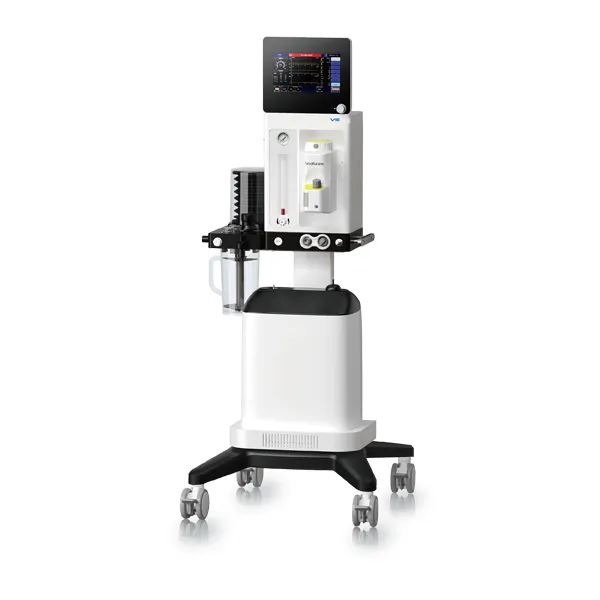
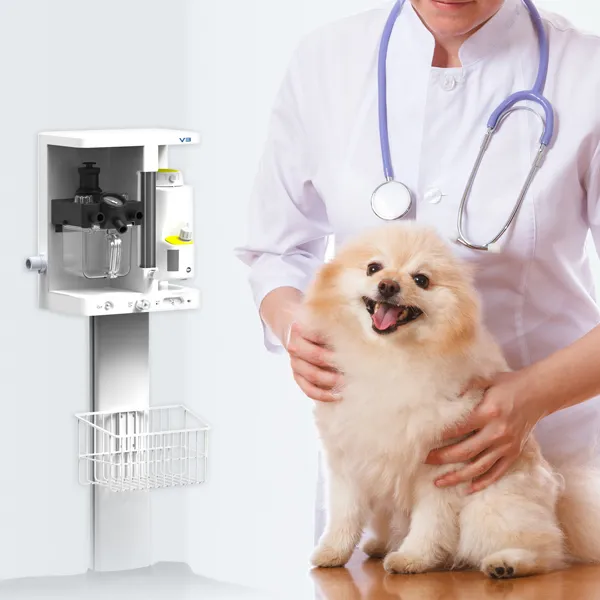
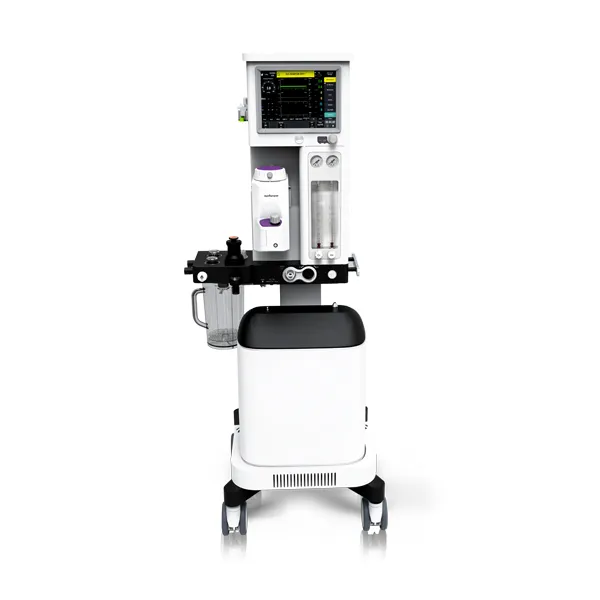
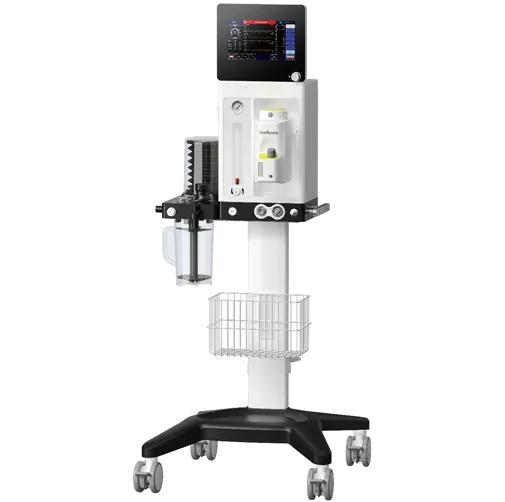
Cart-Mounted Setup: A heavy-duty, fully non-magnetic trolley with locking casters allows the machine to be moved smoothly from the pre-op induction area directly into the magnet room, staying safely behind the designated gauss line.
Wall-Mounted Setup: Affixing the machine to the wall structure maximizes floor space, prevents accidental tip-overs, and keeps gas lines organized away from foot traffic.
Tabletop Configuration: Placing the ultra-compact monoblock unit directly on an auxiliary workbench or mobile gurney provides extreme proximity to the patient when executing complex interventional radiology procedures.
To review modular mounting dimensions, architectural integration blueprints, and full configuration packages for your facility, explore the comprehensive RHC Medical Products Portfolio to find the ideal match for your imaging space.
At the end of the day, a veterinary diagnostic center thrives on throughput, accuracy, and reputation. If your anesthesia system causes image distortion, your team will waste hours re-running scans, exposing animals to prolonged anesthetic risk and lowering daily case revenue.
By selecting a specialized workstation built by world-class anesthesia machine manufacturers, you protect your investments from all angles. An airtight, non-ferromagnetic, tube-free system lowers your volatile agent budget, guarantees crystal-clear images on the first take, and ensures your clinical team can focus completely on the patient's vital signs rather than worrying about magnetic attraction risks.
Conducting safe, high-resolution anaesthesia for MRI procedures demands equipment that respects the unforgiving laws of electromagnetic physics. From protecting patients against the missile effect to removing subtle artifacts that ruin diagnostic images, every single detail of your imaging suite's anesthesia setup must be engineered for high-field harmony. By selecting a system with a verified 3T-compatible monoblock design, intuitive one-touch controls, and structural installation versatility, your clinic sets a gold standard for modern veterinary care.
At RHC Medical, we are dedicated to designing advanced, high-precision veterinary systems that empower clinics to push the boundaries of animal medicine safely and efficiently.
Are you looking to outfit a new high-field imaging center or upgrade your current magnet room with premium, non-magnetic anesthesia technology? To request a detailed quote, secure technical data sheets, or schedule a virtual demonstration with an equipment specialist, visit our RHC Medical Contact Page today, and let us help you optimize your clinical workflow.
An MRI-compatible machine is built entirely without ferromagnetic metals like iron or standard steel. Leading anesthesia machine manufacturers use non-magnetic alternatives such as high-purity aluminum, brass, titanium, and specialized polymers so that the machine can safely operate near high-field magnets without causing projectiles or image distortions.
Investing in a system rated up to 3T ensures future-proof utility for your facility. 3T magnets feature double the magnetic field strength of a 1.5T scanner. A machine engineered for 3T environments features superior non-magnetic shielding and tighter tolerances, ensuring total safety and zero artifact generation if your clinic decides to upgrade its imaging hardware later.
Traditional external hoses add dead space, create a cluttered workspace, and can harbor tiny metal reinforcement elements that overheat under intense radiofrequency fields. A monoblock design encloses the gas pathways internally, eliminating clutter, preventing accidental disconnection in the dark MRI room, and providing maximum structural safety.